Do You Need an Ultra Running Coach? When 1:1 Coaching Actually Makes Sense
If you are looking at entering your first ultra, chasing a PB, moving up to 100 miles or just trying to get a bit more structure into your running, at some point you have probably wondered whether you actually need a running coach.
The simple answer is no.
You don't need a coach to run an ultra. Plenty of people train themselves, download a training plan, join a club or simply make things up as they go along. Sometimes very successfully. The better question is whether having a coach would make your training better, easier to manage and more specific to what you are actually trying to achieve.
Because that is really where 1:1 running coaching comes in.

What Does an Ultra Running Coach Actually Do?
I think there can sometimes be an assumption that a running coach basically tells you how many miles to run each week.
Monday easy run. Tuesday intervals. Wednesday rest. Long run at the weekend. Repeat until race day.
There is obviously a bit more to it than that.
A good ultra running coach should be looking at the bigger picture. Your current fitness, previous training, work, family life, injury history, available terrain, race goals and how much time you can realistically dedicate to training. There is very little point giving somebody the "perfect" training week if there is absolutely no chance of them completing it.
That is probably one of the biggest differences between personalised running coaching and simply following a training plan.
The training has to work in the real world.

Training Plans Are Not Bad
Considering we sell training plans, it would be slightly ridiculous for me to tell you that everyone needs a coach!
They don't.
A well-designed ultra marathon training plan can work brilliantly if you already have some training experience, your life is fairly predictable and you are confident making a few changes yourself when needed. For some runners, that is exactly the right amount of support. You get the structure without needing the ongoing contact or cost of 1:1 coaching.
The problem starts when people treat a training plan like it has been carved into stone.
You miss Tuesday's run, so you move it to Wednesday. Then Wednesday's session gets moved to Thursday. Suddenly you are doing three harder days back-to-back because you are determined to tick every green box. Training doesn't really care about green boxes. Sometimes the best thing you can do is miss a session.
The Biggest Benefit of 1:1 Running Coaching Is Adaptability
Life gets in the way, and that’s okay!
Work gets busy. Children get ill. You go on holiday. Your legs feel terrible for absolutely no obvious reason. Or you feel amazing and suddenly the training you were doing six weeks ago isn't challenging you anymore.
A static running plan can't see any of that.
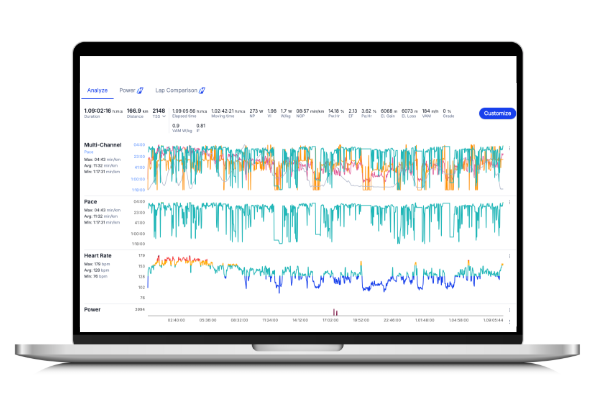
With our 1:1 coaching, we generally work around one to two weeks ahead rather than filling six months of TrainingPeaks and hoping life behaves itself. If something changes, the programme changes. That might mean moving your long run, changing an interval session to an easy run, adding recovery or occasionally pushing things forward when you're responding particularly well. There is still a bigger plan behind everything, but there also needs to be some flexibility. Ultra running itself is exactly the same. Very few races go completely to plan.
I'm not particularly interested in creating athletes who can only perform when everything is perfect.

More Training Isn't Always Better Training
This is one of the areas where having an online running coach can be particularly useful.
Runners quite like running.
Shocking, I know.
The natural reaction when training is going well is often to do a bit more. A slightly longer Sunday run. Another hill session. A few extra miles because the weather is nice. Individually, none of those things look particularly dramatic, but over six or eight weeks they can start adding up. Then you wonder why your legs feel flat, and your easy pace suddenly isn't very easy. Part of coaching is knowing when to add training, but another part is knowing when enough is enough. You don't get fitter from collecting as much fatigue as possible.
The aim is to apply enough training to create an adaptation, recover from it and then go again

Then there is everything that isn’t running.
This becomes increasingly important as races get longer.
Training for an ultramarathon isn't only about whether your legs can cover the distance. You also need to think about:
Fuelling
Hydration
Kit
Pacing
Foot care
Navigation
Running at night
Weather
Hiking
Using poles
Managing aid stations
What to do when things start going wrong
At 10km, getting your pacing slightly wrong might cost you a few minutes. At 100 miles it can turn into a very long day out. I often describe this as making runners Adventureproof. Fitness is obviously important, but I also want the runners I coach to be capable of making good decisions when they are tired, cold, hungry and wondering why signing up for an ultra seemed like such a good idea six months ago.
That side of ultra running is difficult to get from a spreadsheet alone.
Do Beginner Runners Need a Coach?
1:1 running coaching isn't only for fast runners or people chasing podiums.
In some ways, beginners can benefit more because there are fewer bad habits to undo. When you first start running, there is an enormous amount of information online. Heart rate zones. Zone 2. Cadence. Thresholds. VO2 max. Carbon shoes. Fueling strategies. Recovery scores.
Most of it isn't necessarily wrong, but you definitely don't need to worry about all of it at once. If you are training for your first 5K, 10K, half marathon or ultra, the priority is usually much simpler. Build consistency. Gradually increase what your body can tolerate. Recover properly. Enjoy enough of it that you actually want to keep going.
Coaching can help filter out a lot of the noise and focus on the things that matter to you right now.

Is Online Running Coaching Worth It?
It depends what you want from it.
If you simply want somebody to give you a schedule, a good training plan may be better value.
If you want your training regularly reviewed, changed around your life and built specifically towards your goals, then 1:1 coaching starts making much more sense.
You are not really paying for a list of running sessions. You are paying for the decisions around them.
Why this session?
Why now?
How hard?
What happens if you miss it?
When should the volume increase?
When should it come down?
Does your training actually resemble the race you're preparing for?
Sometimes the most useful coaching decision in an entire week can be telling somebody not to do the session that was originally planned.
What Does 1:1 Coaching With Beyond Ultra Look Like?
Our 1:1 running coaching is built around the individual rather than asking you to fit into a fixed programme.
Our 1:1 running coaching is built around the individual rather than asking you to fit into a fixed programme. That can mean somebody training for their first event, right through to an experienced ultra runner preparing for a 100 or 200-mile race. Your programme is built around your current fitness, your race calendar, the time you have available and the areas we think will make the biggest difference.
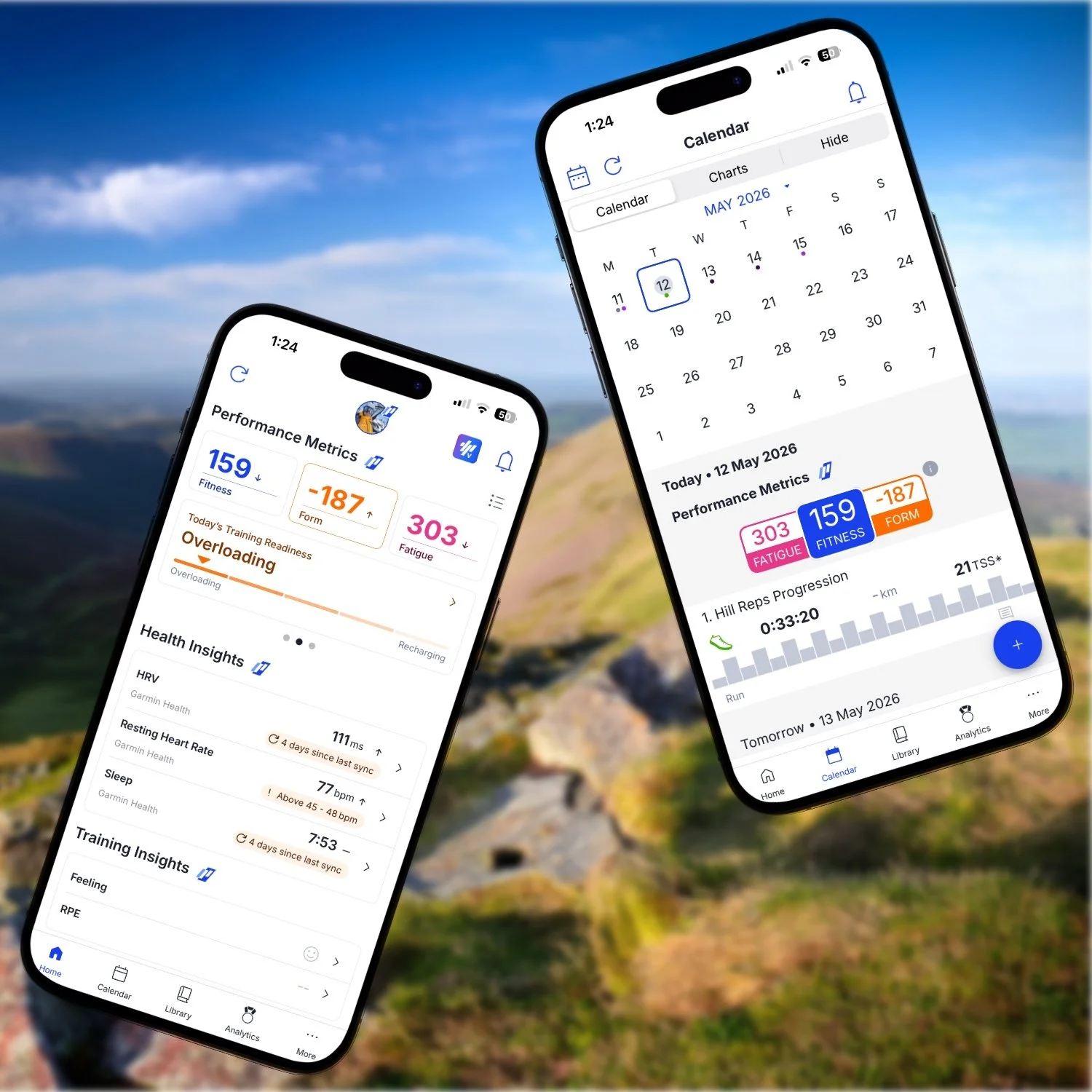
Running sessions and strength work are planned together, rather than being two completely separate programmes. We use TrainingPeaks to deliver and review training, but the numbers only tell part of the story.
Your feedback matters just as much.
If a session felt awful, tell me.
If something felt unusually easy, tell me.
If work has suddenly decided that this week is going to be chaos, definitely tell me.
That feedback is what allows coaching to actually be personalised.
We also work through the things around your training including pacing, race strategy, kit, nutrition and recovery so that by the time you reach the start line, you have hopefully answered most of the big questions already.
Check out our shop for more detailson the different levels of coaching we offer, or get in touch today!
Our most complete coaching package, built for runners who want more than just a training plan.
With 1:1 Coaching, your training is built around you and continually adapted as you progress. We work closely with you throughout your training, reviewing feedback, making changes when needed and helping you deal with everything from a busy week at work to the final few weeks before race day.
Whether you're training for your first big event, chasing a PB or preparing for a 100-mile ultra, you'll have a coach involved throughout the process.
For £95 a month, you get:
TrainingPeaks Premium subscription (usually £14.99/month)
Fully personalised training
Regular training reviews and adjustments
Strength & conditioning
Unlimited coach contact
Calls whenever you need them
Race preparation and strategy
Advice on pacing, nutrition, kit and recovery
Race Comeback Guarantee